
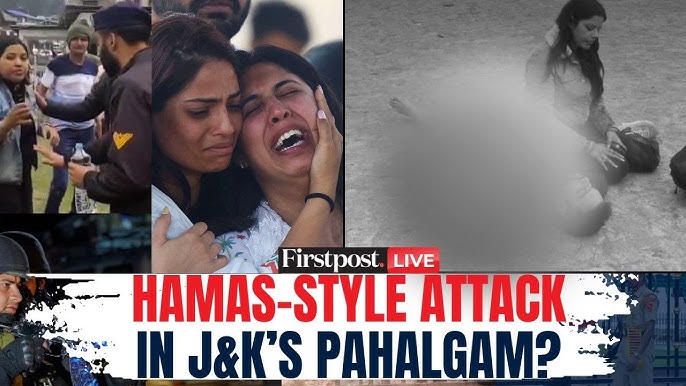

On April 22, 2025, the serene Baisaran Valley near Pahalgam in Jammu and Kashmir was transformed into a scene of unimaginable horror. A terrorist attack claimed 26 lives, including 25 Indian nationals and one from Nepal, with over 20 others injured. The assailants, armed with AK-47s and M4 carbines, targeted tourists, segregating them based on religion before opening fire . This incident marks the deadliest attack on civilians in the region since the 2008 Mumbai attacks .

The Attack: A Chilling Account
The assailants, believed to be members of “The Resistance Front” (TRF), an offshoot of the Pakistan-based Lashkar-e-Taiba, entered the Baisaran Valley, a popular tourist destination accessible only by foot or horseback. They proceeded to segregate male tourists from others, demanding they recite Islamic verses to ascertain their religion. Victims were then shot at close range, with some survivors recounting that attackers spared them to “narrate the horrors” to Indian Prime Minister Narendra Modi .
The TRF claimed responsibility for the attack, citing opposition to the settlement of non-Kashmiris in the region as their motive. Intelligence agencies later identified Saifullah Kasuri, a top Lashkar-e-Taiba commander, as the mastermind behind the massacre .
Government Response: Immediate Actions
In the aftermath of the attack, the Indian government initiated several measures:
- Diplomatic Measures: India downgraded diplomatic ties with Pakistan, suspended the Indus Waters Treaty, and closed its main border crossing.GZERO Media+3The Times+3The Washington Post+3
- Military Actions: The Indian Army launched Operation Sarvashakti, targeting terrorist hideouts in the region.The Economic Times
- Investigation: The National Investigation Agency (NIA) initiated an investigation, releasing sketches of three militants believed to be involved in the attack .Wikipedia
Pakistan denied involvement in the attack and condemned India’s actions. Tensions between the two nations escalated, with both sides engaging in retaliatory measures .Wikipedia+4The Washington Post+4Reuters+4
Strategic Analysis: Understanding the Implications
The Pahalgam attack underscores several critical issues:GZERO Media+8The Times+8The Washington Post+8
- Cross-Border Terrorism: The involvement of Pakistan-based groups highlights the persistent threat of cross-border terrorism.
- Demographic Concerns: The TRF’s stated motive reflects ongoing concerns about demographic changes in the region.Wikipedia
- Tourism Vulnerability: The targeting of tourists indicates a shift in militant strategies, aiming to disrupt the state’s economy and image.Wikipedia+1AP News+1
These factors necessitate a comprehensive review of national security policies and strategies.
Recommendations for Strengthening National Security
To effectively counter such threats, the following measures are recommended:
- Enhanced Intelligence Sharing: Strengthen intelligence-sharing mechanisms with international partners to preempt terrorist activities.
- Counter-Radicalization Programs: Implement programs aimed at countering radicalization, focusing on vulnerable youth in conflict zones.
- Tourist Safety Protocols: Establish robust safety protocols for tourists, including increased security presence in high-risk areas.
- Diplomatic Engagement: Engage in sustained diplomatic efforts to address underlying issues contributing to cross-border terrorism.
- Public Awareness Campaigns: Launch campaigns to raise public awareness about security threats and encourage cooperation with authorities.
Conclusion
The Pahalgam terror attack serves as a stark reminder of the evolving nature of threats facing the nation. It calls for a unified response that encompasses military, diplomatic, and societal efforts to safeguard the country’s sovereignty and ensure the safety of its citizens. By adopting a multi-faceted approach, India can effectively counter the challenges posed by terrorism and work towards lasting peace and stability in the region.